Monday, February 18, 2013

CHARACTER PART 1


CHARACTER

PART 1: SPEED DATING

Or: 5x5


For the next couple of weeks, I'll be blogging about Characters, development, types, and different ways to tighten your WIP from the characterization point of view. 

From my experience Betaing and working with other writers, "Characters" is one of the most difficult things to talk about or change in a WIP. It might be because, if plot is the backbone of a story and pacing is the heartbeat, the main character is the soul. 

How? 

Let's put our yoga pants on and get metaphysical.

You might have seen the phrases "character-driven" and "plot-driven" stories. Or MICE quotient (Milieu vs. Idea vs. Character. vs. Event). No matter what kind of story you have, the reader's interest in your story, the compulsion to turn the page, rests on how much they care about your Character. 

This is because the Main Character is your reader's proxy, or avatar, in your story. In other words, the reader experiences your story through the Main (or POV) Character. Which means that the Character must be, at the most basic level, relatable enough for his or her choices to make sense. The reader should know, at the very least, enough about your character to empathize with and understand why they choose to Pursue Questline or Solve Mystery or Desire Love Interest. 

Which means you, the writer, must know the Character better.

How? 

The Speed Date:
When you're on a speed date, you have anywhere from five to ten minutes to "get to know" the person sitting across from you. You can ask the five W's: 
Who, What, Where, When, Why.

Who are you? (In literary fiction, this could be as shallow as "Who are your parents?" which could lead to something as deep as "Who are you in relation to the universe?")

What are you? (In fantasy, this could literally be "What race are you?" or broadly "What is your socio-economic status/ occupation in the realm?")

Where are you? (In a mystery, it could be as plain as "Where can you use your skills best?" or as challenging as "Where would you be the most powerless?")

When are you? (In any fiction, this could be as basic as "When did you come into existence?" or  as specific as "When did your involvement change the outcome of the story?")

Why are you? (The greatest questions one can ask in Speed Dating, and while working on the first five pages of the WIP: "Why you and not someone else?" "Why are you so special?" and "Why are you here?")

Try to answer each question with Specific and Unique Details. 

You can do something as simple and direct as jotting these down on index cards or as involved as creating entire backstories.

Choose the method which works for you, but the one I've found to be most useful is to answer all five questions on one page. Then put these into a binder, and this creates your Character Manifesto. I call it the 5x5 (Five by five. If you're a fan of Whedon, this should be familiar to you. It's shorthand for a transmission's signal strength and clarity, with five the highest possible rank. This should help you focus your revising on honing your characterization's "strength and clarity" - How strong is your character's impression on the reader? How clear are your character's truths?). Refer to it as you revise.

Should you Tell your reader all this information within the first five pages? Oh hell no.

Show them. 

Here's some example Speed Dating Answers:
Jack
Who: The son of two low-caste drug addicts, who sold him to a Seed Importer.
What: Now he's a fey-hunter.
Where: He grew up in the trendy skyways of Han-ji Metro.
When: Obviously, some not-too-distant future.
Why: This is his story, he is the main character, he has the most to lose in almost all the scenes, and he has to hide the fact that his birth parents were low-caste drug addicts from his friends in Han-ji and his fellow fey-hunters.

Wen-Ai
Who: Eldest daughter of Court-Officer Yun-tze.
What: Leader of Jack's squad.
Where: She grew up and trained in the austere, severe monasteries of Dasgada's smallest moon.
When: Same timeline as Jack.
Why: For a secondary character, the question would be: "Why are you helping/hindering/antagonizing my main character?" Wen-Ai's answer: She feels Jack gets distracted too easily, doesn't know why, and fears it will endanger everyone else under her command.

Knowing the five W's of these two characters will help shape and refine how they react or act in all their scenes. 

Which one of them would saunter and which one would stride?
How would the way Jack say "It's not my fault," differ from how Wen-Ai would say it?
Who would be more likely to want to stop in the middle of a raid and look at shoes in a store window?

How your characters react and act will Show your reader the background information that you, the writer, already know.

If you had issues answering any of the Speed Dating questions, spend some time on it before you revise your WIP. Because if you don't know the answer, how can you expect the reader to?

The best way to know if your Characters – and therefore, your story – are coming across the way you intend is to have a Beta reader go over the WIP and see if any of their critiques can be answered by Showing one of the answers in your Speed Dating list.

Frex: A Beta might comment "This doesn't seem like something Wen-Ai would say" to the line "It's not my fault!" 

Applying the answers to Wen-Ai's Speed Dating Where and Why could change the line to: "It's not one person's fault, Commander," said Wen-Ai, silencing Jack with a look. "We go in as a team, we return as a team."

*** ETA: 2/20/13

For a more involved take on finding your Character's Voice, check out this post "How Do You Find a Character's Voice?" on Nat Russo's blog, A Writer's Journey.

He's a friend and fellow tweeter known as @NatRusso. Follow him for daily #writingtips and #grammartips.
***


Some more fun resources on how to "Get to get to know your characters."
Caveat! These can be HUGE time consumers. Remember your priorities and judge for yourself whether or not these help or hinder you.

Mary Sue Questionnaires:


Character Interview

Lastly, if you can get your hands on a complete Scientology Stress Test, you can try taking it from the POV of your characters. 

Happy Writing,
J 
 
Coming Up:
More Character.
Dialogue
Dialogue Tags
Passive
Verbing
Robert Bevan 
Nat Russo
Laura Oliva

Monday, February 11, 2013

Jay Groce Guest Post


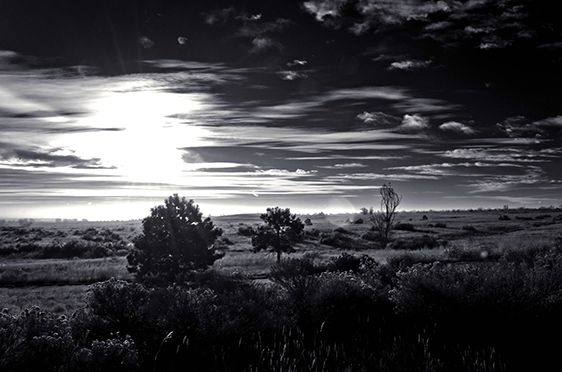
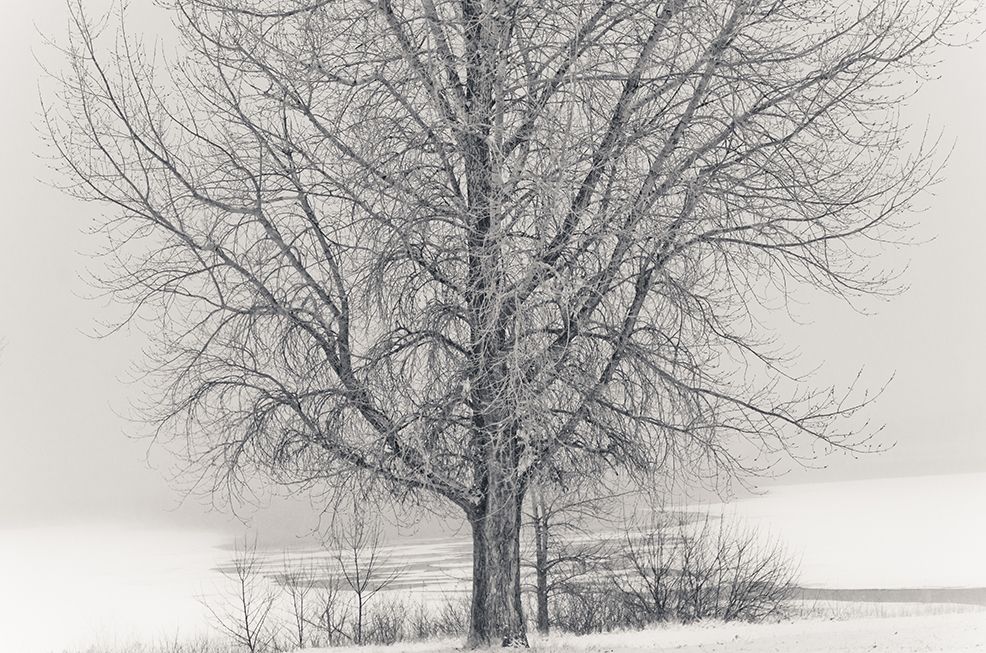
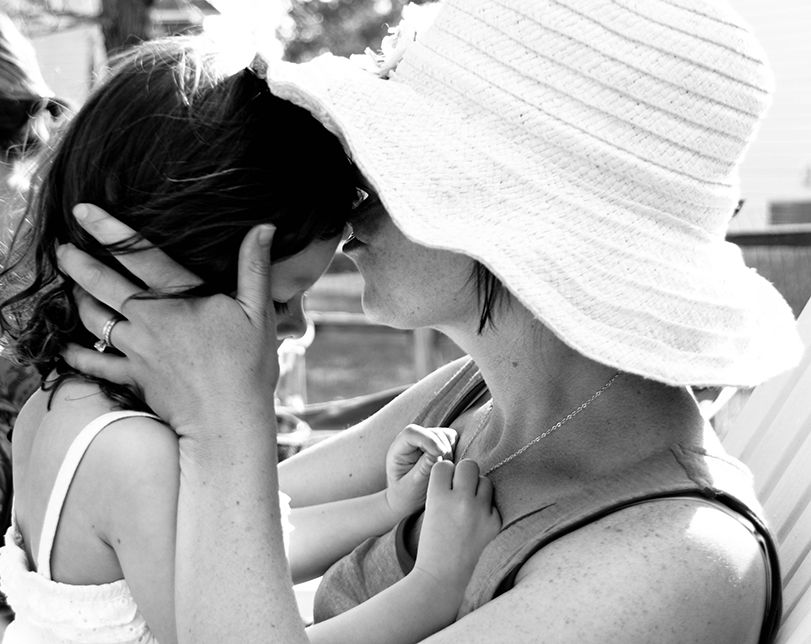
All photographs by Jay Groce. Click to enlarge.

DESIDERATA

Guest Post on Writing by Jay Groce


I was watching Wild Kingdom this morning while eating my Grape Nuts. The cameras were following a mother cheetah and her four cubs through the grasslands, and I tuned in just as they lost a freshly killed gazelle to a wake of aggressive vultures.  The narrator stressed the importance of finding another meal soon, because having lost one cub to a pair of lions, the mother cheetah needed to ensure the rest of her offspring survived.  I was rooting for the cheetahs. They’d experienced some tragedy and were just trying to get by. Plus, the cubs were really adorable. 


After the commercial break, the cheetahs spotted a nursing gazelle, and all too easily separated it from its mother, who ran in an attempt to draw the cheetahs away from her baby.  She looked on as her child died, and having lived through that myself, I was suddenly very anti-cheetah. I hadn't really planned on reliving those moments so early in the day, so I turned off the television and headed to work.  


I couldn’t help thinking, while sitting in traffic, that the world is full of cheetahs. There are so many things that could be lurking in the grass, stalking us, at any given moment. Imagine standing in the middle of a field nursing your child when suddenly something sneaks up and eats her.  

I suppose this doesn't happen to humans – at least, not that often.  I used to think it was because humans were well equipped to evade these types of tragedies.  Gazelles, on the other hand, have very little ability to protect their offspring – they can’t carry them, or defend them. They best they can do is run away, and hope they get eaten instead of their offspring. 


But we humans are a highly developed animal, and we excel at protecting our offspring. We can fight, we can carry our children to safety, we can squirt hand sanitizer all over their bodies and put helmets on their heads. All of these things (some of these things) help us protect our children from being eaten by cheetahs – the real kind – but sometimes, all the humanness in the world still can’t save our kids.

The Right Words

Emmy


In March of 2009 my 11-year-old daughter, Emmy, died from pneumonia complicated by MRSA.  She was healthy on Tuesday, and died Friday morning. The speed with which this happened, the horror of watching my kid die, and the guilt I felt as a parent, are indescribable – literally. There are words that I could use to tell you in detail what I saw – but in almost four years of searching for the right words, I’ve never been able to eloquently relate how it felt, or how I feel today.


As I writer, this has frustrated me beyond measure.  Since the seventh grade, when bad stuff happened, I wrote about it. I wrote about good stuff too and by college, I was writing about every experience I had.  It defined who I was as a person, at least in my head.  When I was having trouble, I could write myself out of it. If I was bored with my job, I would sit in my car at lunch and write. If I was feeling some marital strife, I could sit at the computer late at night and work through my thoughts with my writing. 

I suppose, now that I look at it, writing never really solved anything. But it always made me feel better to get my feelings out and occasionally, I’d get something useful in the process. There were times I would get serious about my writing and publish something here or there, but for the most part it had always been my thing to do when I needed to think things through, or to feel like myself. 


When my kid died, I fell into a deep, seemingly bottomless well – and no matter how I tried, I couldn’t write my way out of it.  I wrote volumes in the weeks following my daughter’s death.  But what I felt was not resolution or creative release, but frustration, and exacerbated sadness. 

In my grieving process, I skipped over denial pretty quickly and went straight into anger. I was angry at the world, I was angry at myself, I was just angry. My language reflected this, and when I would read back what I wrote, I had no idea who this asshole living in my head was.   

I needed desperately to exorcise the images that now dominated my daily life. I needed to write until my fingers ached and leave it all on the paper so that I could get on with living. But, it just wouldn’t come out of me – it held on tight to my psyche and wouldn’t let itself be managed. 

So, I did what anyone would do (I assume) – I just gave up.


It Defined Who I Was 

I think gazelles, and animals in general, must be wired a little differently than humans – at least humans of today. Animals have one to five kids every year and expect that many of them will die. I don't know how many offspring the average female gazelle produces in her lifetime, but I have to guess it's more than two, and less than a thousand.  I read recently that even 100 years ago, humans did not emotionally invest in their offspring until they were well into childhood, so that it would be less traumatic when, inevitably, little Timmy died of the plague, or pneumonia, or some other horrid illness that we no longer have to worry about. So, mentally, I realize the problem is not that my kid died, but that I invested emotionally in her long before it was advisable to do so.   

That doesn't make me feel any better.


If you are as connected to your writing as I was, then you can imagine how difficult it was to just stop writing. I was in the midst of the most tragic moment of my life. I was trying to hold up my wife and be a good dad to my oldest daughter. I was working to keep food on the table and to keep what little sanity remained in our lives. I was aggressively unhappy, but could not go to my happy place, because it had been burned to the ground.

I reached the point where it felt better not to write.  My life since my daughter died has been an emotional wave pool – sometimes I'd get to the top of a wave for an hour, or a day, but then I'd sink back down and might not see another wave for a month.  Writing was like an anchor pulling me under the water, so that even on my best days, it made me feel like I was drowning.  So, after months of filling blank pages with emotionally dark and repetitive crap, I hung up my keyboard and called it quits.

I Never Stopped Calling Myself a Writer


I never stopped calling myself a writer. But, in the summer of 2010, I started calling myself a photographer as well.  My daughter was playing high school volleyball, and I wanted to take pictures at her games. I'd always wanted a decent camera, but had never had a great reason to invest in one. Suddenly, memories of my kid as a kid seemed important, so I bought a camera. Every day since then, I have studied photography. 

At first, it was a way to keep my mind from wandering to the dark place. Motivated by a desire to take better pictures, and a genuine interest in the world of photography, it grew into a hobby.  Before I knew it, people began asking me to take pictures of them, and then giving me money to take pictures. 


What I found, after a while, was that occasionally I’d take a picture, and I’d feel like writing about it. One of the first times I did this, I mentioned that writing and photography were not so different, as creative outlets go.   

When you have the tools, the knowledge and the desire to create something – whether that something is playful or meaningful or sad – the end result of the process is that something comes out of your brain and gets put on paper (or a computer screen) for the world to see.  What is different is that when you are looking through the lens, especially if it’s new and you are concentrating on not screwing up, it is difficult to think about your kid dying.  That is what I love most about being a photographer.


A year or so ago, I said that photography saved my life. I still believe that to be true. It was a much needed release for my pent up creativity, and took my mind out of the present for a little while. Additionally, photography opened some mental doors for me, and offered me a new approach to writing that focused less on my feelings. Writing about why and how I made a photograph is much less taxing emotionally than writing about having to take happy pills just to be able to face the world. It is probably less interesting, and that is something I'm working on, but it keeps the juices flowing, and the fingers nimble.

Having the Need to Write


Grave


In the intervening years, I’ve gone back to my writing place a time or two, and I’ve even sat down and wrenched out a few things. It is no longer a happy place, but It is a place, and for now I have to be okay with that.  I’ve started a novel, which I’ve come to view as a thing – like a picture – that I can write through. In it I can relate some of my feelings, but I don’t have to cut myself and bleed on the paper if I’m not feeling especially up to it. Having the need to write, but not the ability, has forced me to find a different way to approach writing. I’m not sure if the new way is better, but I do know that I still have much to say to the world – more now than ever probably – and I’m hoping this new way allows me to say it.


Not a cheetah.
I said the world was full of cheetahs, and while I believe that any of us could be eaten at any time, I do not live my life in fear.  Most of the time, we humans do a pretty decent job of protecting our offspring, and each other, from cheetahs. Part of the healing process is coming to terms with the fact that bad things happen, but realizing that they don't happen all the time. I know eventually I'll have to write about that day, once I find the words. I think my brain is secretly working on finding those words, which is why it won't fully participate in anything else I need it to do. That's going to be tough, but I know that I'll likely live through it.  


In the interim, I'll keep dancing around it. I'll touch briefly on my shiny new views on death and tragedy while describing a photograph of a young deer, the beginnings of a rose bud, or a tree in winter.  I will write a novel, which may deal with the fallout, and the rebuilding that happens after a tragedy. The point is, I will continue to write, despite it being difficult, and despite my constant self-sabotage.  It's the cheapest therapy I know, and for me, the most effective. The way to conquer grief is through love, and for that you need other people. But, for wisdom, and imagination, you must turn inward. That's what writing is for me – not the path out of grief, but a life-long journey to understand myself.


***
All photographs are by Jay Groce and posted with his permission.

***
Hey WIPpers -
I've been a fan of Jay's writing since 2004, when we first met via personal blogs. 
He has an eye for balance and, being a writer as well as photographer, understands the synergy words and images can create. If you would like to collaborate on book cover projects (or writing projects!), here is his contact information:

http://photos.jaygroce.com/
Photoessays: http://www.writejaywrite.com/
Direct email: jgroce(at)gmail(dot)com
He also has a permanent link on the right side of this blog.

Happy writing,
J

Coming up:
Characters
Dialogue
Dialogue Tags
Passive
Verbing
Robert Bevan 
Nat Russo


Monday, February 4, 2013

Liebster Award Acceptance


 Accepted!


What's a Liebster Award? (Copied from Nat's awesome writing blog. Thanks for nominating me, Nat. You're Super Spesh.)

A Liebster Award is a nod from fellow bloggers that they like something you're doing. It's also a way of spreading the word about up and coming blogs and bloggers. Does it get any better than getting a pat on the back from your peers?


As with most awards, there are some rules.

Liebster Award Rules

  1. Post the award image on your blog. There are several varieties. Google them and find the one you like the most.
  2. List 11 random facts about yourself.
  3. Answer the 11 questions asked by the person/people who nominated you.
  4. Make up 11 questions for those to be nominated.
  5. Nominate 11 people to receive the award. They should have fewer than 200 followers on their blog.
  6. If you're nominated, your name and/or link will appear at the bottom of this post. Just follow the same format and voila! you're a recipient.


11 Random Facts

1.
Futurehusband likes to say I have a stone heart. I don't know why; I'm ever so kind. It's not true, you know. I've had it tested.

2. 
I adopted my dog, Toby, from the Humane Society. I'd been looking for a dog for a few months, but I knew I didn't want to buy one from a breeder. I wanted a purse dog. Yes, one small enough to fit in a large purse. Don't judge. 

Anyway, I'd been to the Human Society once a week for several weeks, but all they had were pit bulls or large breeds or bony, large-headed chihuahuas. Except they had this one dog that looked like a little lion. Every time I visited, he'd be the only one who wouldn't come up to the door, sniffing and whining and pawing to be let out. His file, hanging on the fence, was triple the thickness of the other dogs' files. I leafed through it. 

The first entries: "Doesn't play well with others. Doesn't like his butt touched. Doesn't like to be picked up. Tail was once broken, never healed right. Will never wag again." Huh. Sounded familiar. 

The latter entries showed promise: "Socializing: barks at big dogs when they play too rough. Let vet touch rump. Played with volunteer for first time." 

They told me he'd been transferred from shelter to shelter, because many of the shelters in my area have a no-kill policy. No one knew how old he was, and no one had shown any interest. It made me sad to think he'd probably die of old age, alone and unloved. 

So I took him home. He keeps my other dogs in line, patrols the house and neighborhood with a Napoleon complex, likes expensive shoes. 

Futurehusband says he's exactly like me. 

3.
I ate ants when I was a kid. My older brother told me they liked to be eaten.

4. 
I ruin the punchline of jokes because I overthink them.

5. 
English is not my first language. I understand two dialects from the Philippines, Spanish, and slowly-spoken French.

6. 
I was on my high school Speech and Debate Team with activist Jose Antonio Vargas. He used to be really hyper as a teenager.

 7. 
While going to UCSB for undergrad, I lived in the Biko Co-op for three years. It was like a sorority house and frat house combined. With hippies. We had a "vegan" fridge (no meat products allowed) and an "omnivore" fridge. One time, an omni had a falling out with a vegan and peed in the vegan fridge. Or was it the other way around…?

8. 
Steve Aoki, founder of Din Mak Records, was in the room next to mine. I remember leaning against his doorframe as he tried to explain how to silkscreen T-shirts to me. I learned a lot about leadership by watching him interact with people.

9. 
I was seven or eight when I realized that holding on to one's truth can sometimes be painful or humiliating or both. A teacher was explaining the difference between alive and not alive. A piece of chalk is not alive, but a cat is. A pencil is not alive, a child is. An egg is not alive, but a chicken is. 

I remember raising my hand and saying that a fertilized chicken egg is alive. (We'd had chickens in the Philippines. If you hold a fertilized egg up to the light, you can see the chick develop day by day. Technically speaking, a cellular process to support life external to another life was going on within that egg.) 

He said all eggs are not alive, all chickens are alive, and to go stand in the corner for lying to my classmates.

10.
No one is my entire family has ever read my stories. Because I don’t write romance. Or "kung-fu". 

11. 
Futurehusband likes to say pregnancy made me more "human." As if the pregnancy hormones eroded my cynicism. He might be right. I haven't found a test for that yet.

11 Nat Questions

  1. If you could live in one of your story worlds, where would it be and why?
This is a tough question. One could say each world a writer creates reveals a deep longing to escape the world they're in and live in the one they can manipulate. What does that say if most of my short stories take place in the Real World? … With regard to the fantasy works, I'd have to say Taramagne, because humans are on the brink of extinction. Would I be one of the humans? Probably not.
  1. Dark chocolate or milk chocolate?
Both have their time and place.
  1. After the first draft is complete, do you take a systematic approach to revision, or just do a read-through and fix what needs fixing? If systematic, describe your system.
It's a system:
A. Read it through on the PC, mostly cutting fluff and fixing what needs fixing.
B. Print it out. Edit with a red pen with an eye for language, rhythm, dialogue, theme development.
C. Do the edits on the PC and print it out for Futurehusband to comment on.
D. Make appropriate changes based on Futurehusband's comments.
E. Give/Send to my Betas.
F. Revise, rewrite, revise, rewrite, etc.
  1. Reese's Peanut Butter cups, or Twix?
Both have their time and place.
  1. Do you prefer to write happy endings or not-so-happy endings? Why?
I write the story the characters create. Whether they're happy or not-so-happy depends on the reader.
  1. Dogs or cats? And yes, there is a correct answer! Explain why you have the correct answer :)
If the question is which one makes a better pet, then my answer is: whichever one you want. I've had both. I like both. So I've never taken a stance in the dog versus cat debate. I've also kept fancy rats, bearded dragons, New Caldeonian geckos, lovebirds, cockatiels, reef tanks, and planted tanks. And I used to work in a pet store. From that I've learned peoples' personalities respond better to some companions better than others. The correct answer is to choose a companion that helps you think outside yourself and helps you develop empathy towards the world in general. For some people it's a boa constrictor. I don't judge.
  1. Do you have a method for approaching plots? Do you outline in advance, or simply free write and see where the story takes you?
For flash fiction and short stories, I just vomit it out.

The longer stories always come out of the blue. A character, usually the main character, comes to me and says "I have a story."

I'm usually already working on one or two projects or studying for a midterm so I say, "Take a number."

"Listen to me!" they say.

"Take a f*cking number! Can't you see I'm busy?"

And they take a number and join the other characters waiting just beyond my desk. Some of them pace, glaring at me now and then. Some of them curl up in the corner and lean their heads against the wall. One of them, Ben, sits patiently on the dining room table, Excalibur dark and gleaming across his knees. Jack and Priya are looking through my pantry. Marci, poor Marci, sits in the far corner of the sofa, bare feet tucked under her legs, watching Youtube videos on her phone.  

But I can hear and see their thoughts. Sometimes, they think so loud or show me something so distracting, I have to write it down and purge it from my mind just so I can think of my own life again.

Then I take all those hastily written notes – on  napkins, the insides of cereal boxes, torn envelopes snatched from the recycling bin – and stitch together their stories' outlines.
  1. Do you listen to music when you write? If so, what kind?
Yes. I listen to specific songs which I've discovered have something that helps me write a specific scene better. Like, Song A has a pace which helps me picture a traveling scene. Or Song B has a part in its melody that helps me feel the anger in a confrontation scene. Whenever I hear a song which evokes a strong feeling, I match it to the story it reminds me of, which results in playlists that I'll listen to through the whole revising process. It helps maintain my focus on pace, imagery, characterization and dialogue.
  1. Who was the headlining act at the last concert you attended? What do you like about them?
I don't go to concerts because I can't tolerate the loudness, or the traffic going in and coming out of Shoreline Amphitheater. I suppose I could walk there…. Still, the loudness….  
  1. If you could go back into the past and tell your younger self a single thing, what would it be and why?
"You know that cute, shy guy who always smiles at you when you walk past each other on Sueno Road? The one with the red corvette? Don't sleep with him."


Just kidding.

I wouldn't say anything to my younger self. I've thought about this, and anything I said could change my current life, which is too good to change. A lot of good things came from the past things I've suffered.
  1. If you could step into the future and tell your future self a single thing, what would it be and why?
"I told you so." Because… I told you so.

Make up 11 Questions for nominees

1. What makes you cry?
2. What is your deepest fear -  a fear you haven't told anyone because you don't want to appear foolish?
3. Han or Luke?
4. How do you deal with criticism?
5. What's the best suggestion you have for new writers?
6. Plotter or Pantser?
7. What short story has influenced your life (not necessarily writing life) the most?
8. What current world event has made you disappointed in humanity?
9. What current world event has made your proud of humanity?
10. Which of your bad writing habits do you wish you could break?
11. What do you like best about your current project?


My Nominees:
I only have three so far, as many blogs I follow already have more than 200 followers (or they don't have a counter-thing.) Will update as I do some sleuthing.